The Quartz Specimen Collector's Checklist: 12 Things to Record Before You Store a Crystal
A quartz specimen without documentation is a pretty rock. A quartz specimen with documentation is a scientific object, a piece of history, and something another collector can genuinely understand. The difference between the two is usually about twenty minutes of work done at the right moment — before the crystal goes into the drawer, not three years later when the dealer's label has vanished and the locality has faded into a vague memory of "somewhere in Brazil". Run through the twelve points below every time you add something to the collection, and future-you will be grateful.
The Checklist at a Glance
Copy this into the front of your catalogue, or keep it in a notebook beside the cabinet. The order matters less than the completeness.
- A precise locality, with a note on how it was established.
- Dimensions: maximum length, width and depth in millimetres.
- Weight in grams.
- Habit: prismatic, sceptred, drusy, doubly terminated, floater, twinned.
- Colour and transparency.
- Matrix and associated minerals.
- Condition, with the position and size of every flaw.
- Any repairs, coatings or treatments you know of.
- Provenance: who found it, sold it, owned it before you.
- Acquisition date and the seller's reference number.
- Photographs from several angles, with a scale, plus one shot of the label.
- Storage location and catalogue number.
Locality and Provenance: The Two Things You Cannot Guess Later
Locality
Country-level data is close to useless. Quartz turns up on every continent, and "Brazil" could mean a dozen districts with quite different habits and colours. Push the information as far as it honestly goes: mine or quarry, nearest town, municipality, state or province, country. A workable entry reads Corinto, Minas Gerais, Brazil.
If all you know is the country, write the country and add "locality unverified" so that nobody — including you in five years — mistakes a guess for a record. Note where the information came from, too: a dealer label, your own field notes, a specimen swap, or a bulk parcel with no paperwork at all. Those notes are what separate a documented specimen from an optimistic one.
Provenance
Provenance is the chain of hands a specimen has passed through: who collected it, who sold it, who owned it before you. An old label from a named collection adds real interest, even when the crystal itself is common. Record the date you acquired it, the person or business it came from, and any stocklist or invoice number. Most importantly, keep an original label with the specimen — not in a separate folder, not in a shoebox of interesting bits. The two belong together.
Physical Facts: Measure It, Weigh It, Name It
Measure in millimetres and note the axes separately rather than writing "about 5 cm". Maximum length, maximum width, maximum depth. Weight in grams, on a kitchen scale if that is what you have. Habit next: prismatic, sceptred, drusy, doubly terminated, floater, twinned. Colour and transparency, with a note on any zoning — amethyst fading to clear toward the tip, for example, is worth recording.
Then the setting. A smoky point on feldspar with muscovite is a different specimen from a loose point of the same size, and a buyer or researcher will want to know which they are looking at. Name associated minerals where you can identify them with confidence, and write "unidentified white blades" where you cannot. A wrong mineral name in a permanent record is worse than an honest gap.
Condition and Damage: Describe It Like a Surveyor
Damage described loosely is damage forgotten. "Chipped termination, upper left, roughly 3 mm" tells a future owner far more than "slight damage", and it protects you from being blamed for something that arrived that way. Work around the specimen under a bright lamp and check the terminations, the prism faces, the base where it detached, and any matrix contacts.
Note anything that might be a repair: glued breaks, filled cracks, polished faces, oil or lacquer coatings. If you are unsure whether a break is natural — a contact face where a neighbouring crystal once grew — or recent, record your uncertainty rather than resolving it. "Possible natural contact, uncertain" is a perfectly respectable entry.
Photographs Before Storage
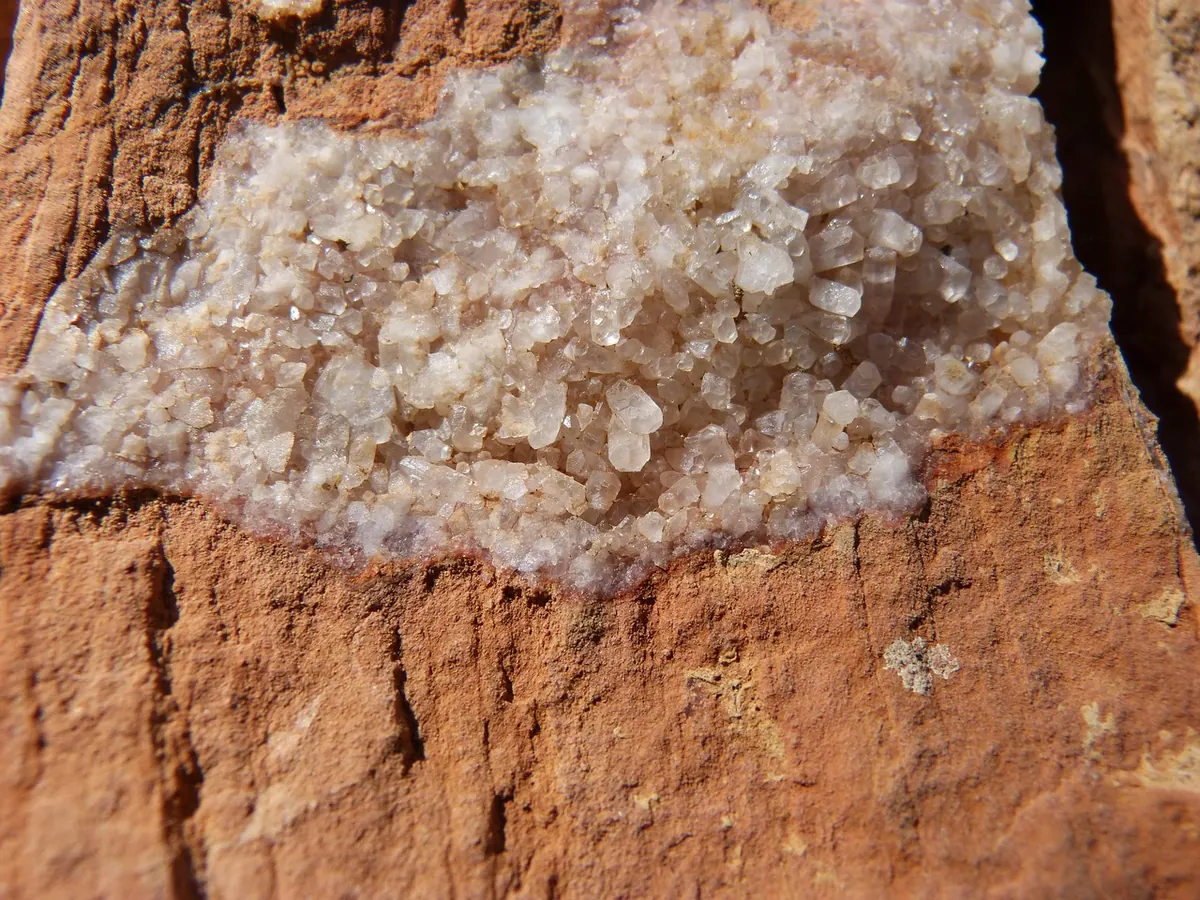
A photograph answers questions that a written description cannot, and it takes five minutes. Set the specimen on a mid-grey card rather than white kitchen paper, which blows out the highlights on clear quartz, and shoot in steady, diffused daylight or with two lamps at roughly 45 degrees so the prism faces catch some light without a wall of glare.
- One full view, straight on, with the specimen filling most of the frame.
- A second angle, rotated a quarter turn, so habit is clear.
- A close-up of each termination.
- A detail shot of any damage, repair or inclusion worth remembering.
- A scale in every frame — a millimetre ruler or a marked card, kept in the same position each time.
- One frame with the label or a card showing the catalogue number, so the image can never be separated from the specimen it describes.
Name the files with the catalogue number and back them up somewhere other than the phone you took them on. When you clean a specimen, photograph it before and after; the "before" shot is often the more useful of the two.
The Label and the Catalogue Number
Give every specimen a number and use it everywhere: on the label, in the photograph filenames, in the catalogue, on the storage box. A simple running number is fine. Write labels in pencil or pigment ink on acid-free card, keep them small, and store the label with the specimen in a polyethylene bag or acid-free box. Avoid PVC wallets and cling film; the plasticisers in them can affect sensitive material over time. A good label carries locality, dimensions, catalogue number and acquisition date, and nothing else that might rub off.
Store It Properly, Then Check Back
Quartz is hard — seven on the Mohs scale — so it will happily scratch softer specimens and softer specimens will not scratch it. Keep pieces from rubbing against one another, pad with acid-free tissue, and avoid direct sunlight if you have amethyst or other coloured varieties, which can fade with prolonged exposure to strong UV. A stable, dry, dust-free drawer or cabinet with a consistent temperature is ideal; sudden swings in humidity are harder on specimens than a steady, slightly humid room.
Then do the part most collectors skip: revisit a specimen a month after storage. Check that the label is still with it, that nothing has shifted, and that no associated sulphides are showing signs of decay. Once a year, run through the catalogue and spot-check a few boxes. It takes an afternoon, and it is the difference between a collection and a pile of attractive stones.
Photo: 15926659 / Pixabay