Lab-Grown vs Natural Quartz Crystals: What Collectors Should Know
Lab-Grown vs Natural Quartz Crystals: What Collectors Should Know
Ask two collectors about a bright purple crystal and you may get two very different answers. One is holding amethyst that crystallised inside a Brazilian geode; the other has a flawless, deeply coloured stone grown in an autoclave in a matter of weeks. Chemically, both are silicon dioxide. In almost every other respect they are different objects, with different stories, different price tags and very different places in a collection. The distinction matters whether you are buying a £20 thumbnail at a local show or a five-figure museum-quality specimen. It shapes how you read a label, how you insure a cabinet, and how you decide what belongs in your collection.
How each one forms
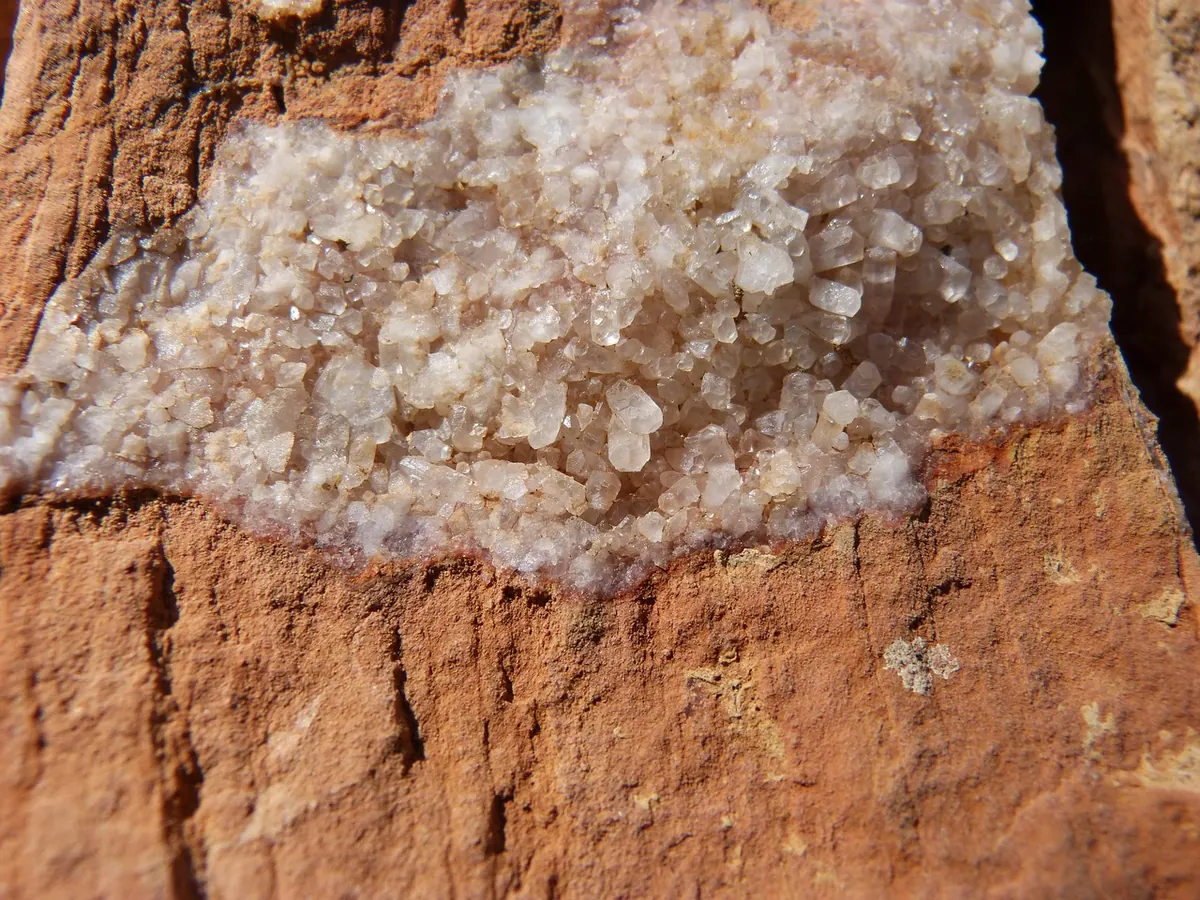
Natural quartz grows where silica-rich fluids cool slowly enough for atoms to lock into a lattice: hydrothermal veins, pegmatites, volcanic vugs and sedimentary geodes. Growth is rarely continuous. Fluids change chemistry, temperatures dip, and the crystal pauses before starting again. Those interruptions are recorded as phantoms, colour zoning, growth lines and trapped minerals such as rutile needles, tourmaline prisms, chlorite flakes and two-phase inclusions. A good specimen is a small history of its cavity.
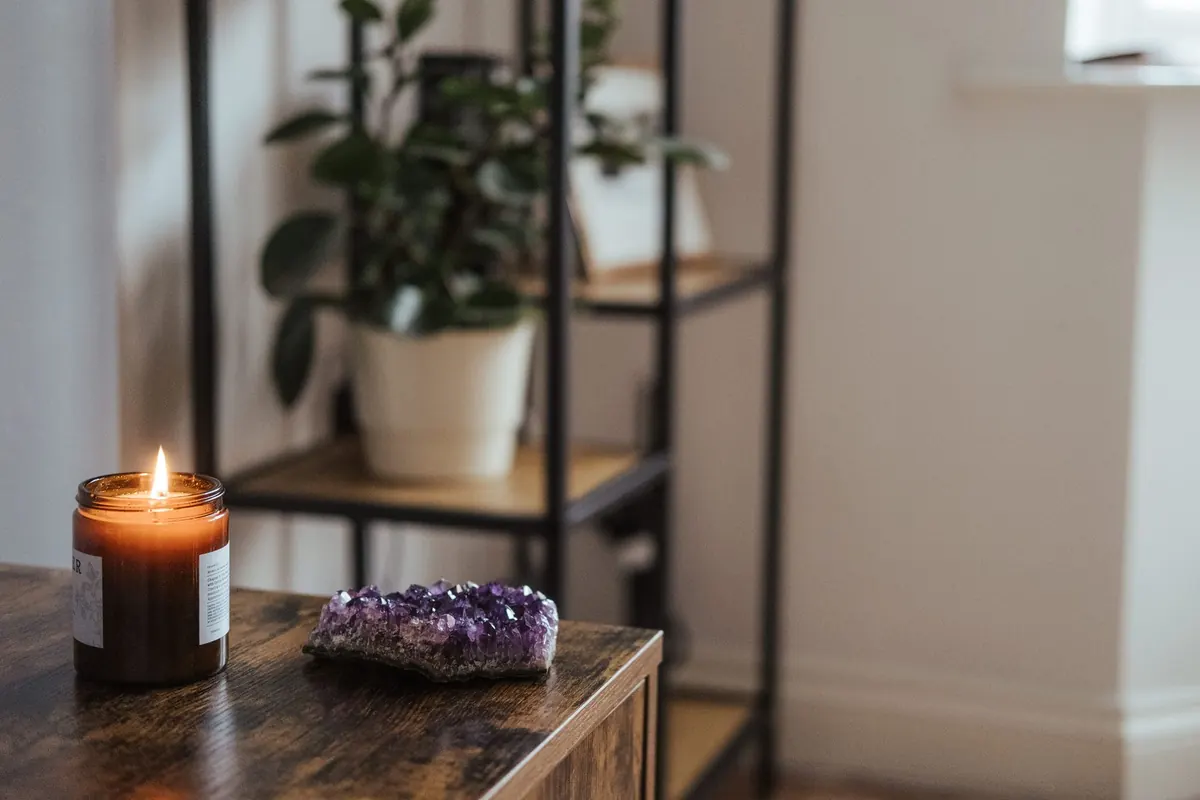
A single amethyst geode from Rio Grande do Sul may have taken tens of millions of years to form, with quartz depositing in pulses as hot basalt cavities cooled and groundwater chemistry shifted. An Alpine smoky quartz on matrix might record several episodes of growth, fracturing, and rehealing. A Herkimer diamond—really a doubly terminated quartz crystal from New York—may be water-clear yet still carry tiny hydrocarbon inclusions that tell you it formed in a pocket, not a factory.
Lab-grown quartz takes a shortcut. A thin seed plate is suspended in an alkaline solution inside a steel autoclave, with nutrient material at the hotter end and the seed at the cooler end. The temperature difference dissolves silica below and deposits it on the seed above. Weeks later, you have a crystal with the same structure and hardness, grown under controlled conditions. Coloured material is doped with trace elements and often irradiated to deepen the colour. A lab amethyst might be grown in a few weeks from a seed plate that is later cut away or hidden inside the finished crystal.
Worth knowing: most lab-grown quartz is made for electronics and optics rather than for collectors. Oscillators and optical components need material that is chemically pure and free of twinning. The quartz in a watch, radio, or laser system is prized for uniformity, not beauty. Collector-market synthetic quartz is often a side product or a deliberate novelty item, which is why it can appear in sizes and colours that nature rarely produces at a low price.
What you can see, and what you cannot
A 10x loupe is still the collector's first tool, and it is genuinely useful with natural specimens. Look for evidence of slow, untidy growth:
- Angular colour zoning, often in patches or bands rather than an even wash.
- Growth lines on the prism faces and termination faces, sometimes sitting at different angles.
- Inclusions: rutile needles, tourmaline, chlorite, negative crystals, two-phase "fingerprint" patterns.
- Twinning, plus the sceptre, gwindel and Japan law habits collectors seek out.
- Rehealed fractures and contact marks from the pocket it grew in.
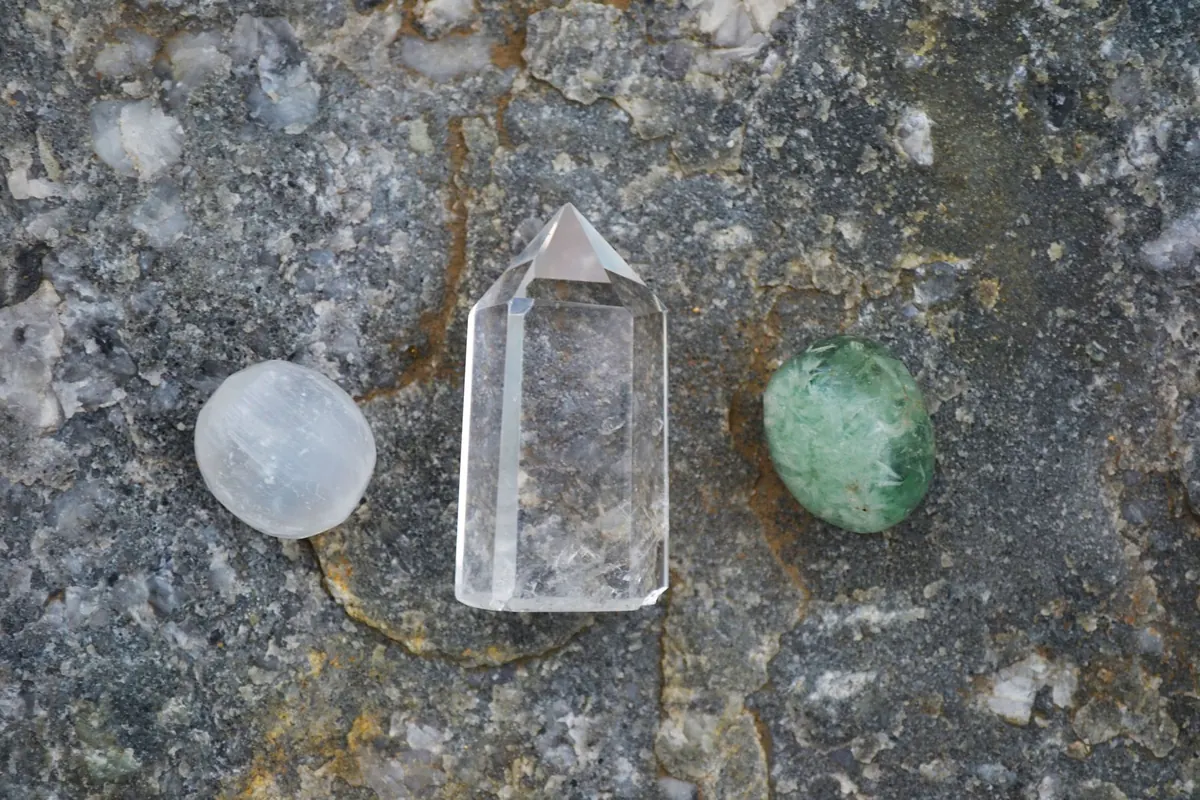
None of these is a guarantee. Natural quartz can be nearly flawless, especially from certain pegmatites, and a clean crystal is not automatically suspect. The point is to look for the accumulated evidence of a slow, messy origin.
Lab-grown quartz typically looks cleaner than anything that came out of a mountain, though that proves nothing on its own, because fine natural material can be clean too. Signs worth noting include a very even colour with no zoning, fine straight striations running at an angle to the seed, veil-like inclusions, and occasionally a visible remnant of the seed plate. Under the loupe, synthetic amethyst may show colour so uniform it resembles coloured glass. Fine, straight striations can run at an angle to the seed. You might see a veil-like curtain of inclusions or a faint rectangular ghost where the seed plate sat. Under immersion or with careful lighting, some synthetic material shows strain patterns around the seed.
Here is the uncomfortable part. With amethyst and citrine, good synthetic material can defeat the naked eye and a loupe. The reliable distinctions come from a gemmological laboratory: infrared spectroscopy picks up differences in how water is bound into the structure, while examination under polarised light with a conoscope can reveal twinning patterns that natural amethyst usually shows and synthetic material usually does not. Infrared spectroscopy is especially useful because it detects how water is incorporated into the crystal lattice—natural and synthetic quartz often differ in OH-related absorption bands. Raman spectroscopy and UV-Vis can also help. None of this is a job for a loupe alone. If a stone matters to you, pay for the test.
If a dealer cannot tell you whether a specimen is natural or lab-grown, assume the price reflects the uncertainty—not the rarity.
Treatments, fakes, and gray areas
Natural quartz is not the same as untreated quartz. Amethyst is routinely heated to produce citrine, rock crystal is irradiated to make smoky quartz, and pale quartz can be dyed or coated to imitate more valuable material. These treatments are widespread, and many are accepted in the trade as long as they are disclosed. A “natural citrine” that is really heated amethyst is still natural quartz, but it is not a naturally coloured citrine crystal, and the price should reflect that.
Lab-grown material adds another layer. Synthetic amethyst, citrine, and rock crystal can be sold honestly as lab-grown, or quietly passed off as natural. Assembled stones—where a thin layer of natural quartz is glued over glass or synthetic material—are another trap. So are glass imitations, which may have bubbles, swirl marks, or a waxy lustre rather than quartz’s vitreous surface. For any purchase where the difference affects value, ask about treatment and origin in writing.
Where the value sits
Natural quartz is valued for what cannot be manufactured: locality, aesthetics, condition, association with other minerals, and the label. A smoky quartz with a clean termination on matrix from the Alps, an amethyst geode with saturated colour and undamaged crystals, a Japan law twin, an old specimen with a historic collection label. Provenance is part of the object. Two amethyst crystals of similar size can differ by a factor of ten because one has a famous locality, a perfect termination, or a documented history.
Lab-grown quartz is priced against production cost, so it is generally a fraction of the price of comparable natural material, and it is available in sizes and clarities that would be remarkable in nature. It has legitimate uses: display pieces, teaching collections, cut stones for enjoying a design or practising appraisal. What it usually lacks is a resale market. A natural specimen with good provenance may hold or gain value; a lab-grown crystal is usually bought as a curiosity or a tool, not an investment.
A practical buying checklist
Before you add a quartz specimen to your cabinet, run through a few questions:
- What is the claimed origin? Locality matters for natural specimens, and vague labels such as “Brazil” or “Africa” are less useful than a mine or region.
- Is it natural, lab-grown, or assembled? Ask directly, and get it in writing if the price is significant.
- Has it been treated? Heating, irradiation, dyeing, and coating are common. Disclosure should be expected.
- Does the price match the story? A flawless amethyst the size of a fist at a bargain price is a warning sign, not a lucky find.
- What does a 10x loupe show? Look for zoning, inclusions, growth lines, seed remnants, or unnatural uniformity.
- Can you return it? A reputable dealer will stand behind the identification.
For inexpensive display pieces, these questions can be informal. For anything expensive, especially cut amethyst or citrine, budget for a gemmological report from a recognised laboratory. The cost of the test is small compared with the cost of a mistaken five-figure purchase.
Display, care, and collecting both
Natural and lab-grown quartz can sit happily in the same cabinet as long as they are labelled honestly. In fact, keeping examples of both is one of the best ways to train your eye. Place a natural amethyst beside a synthetic one under the same light and compare colour zoning, surface lustre, and internal character. Handle them gently: quartz is hard but brittle, and a knocked termination cannot be repaired. Keep coloured material out of prolonged direct sunlight, since some treated colours may fade, and store specimens so harder pieces do not scratch softer ones.
One last point: the pleasure of collecting quartz comes from the story as much as the silicon dioxide. A natural crystal carries the geology of a pocket that existed long before you did. A lab-grown crystal carries the ingenuity of a process that can replicate that geology in weeks. Neither is a fake. The mistake is letting one be sold as the other, or paying a natural-history price for a laboratory product. Learn the difference, ask the right questions, and your collection will be richer for having both.